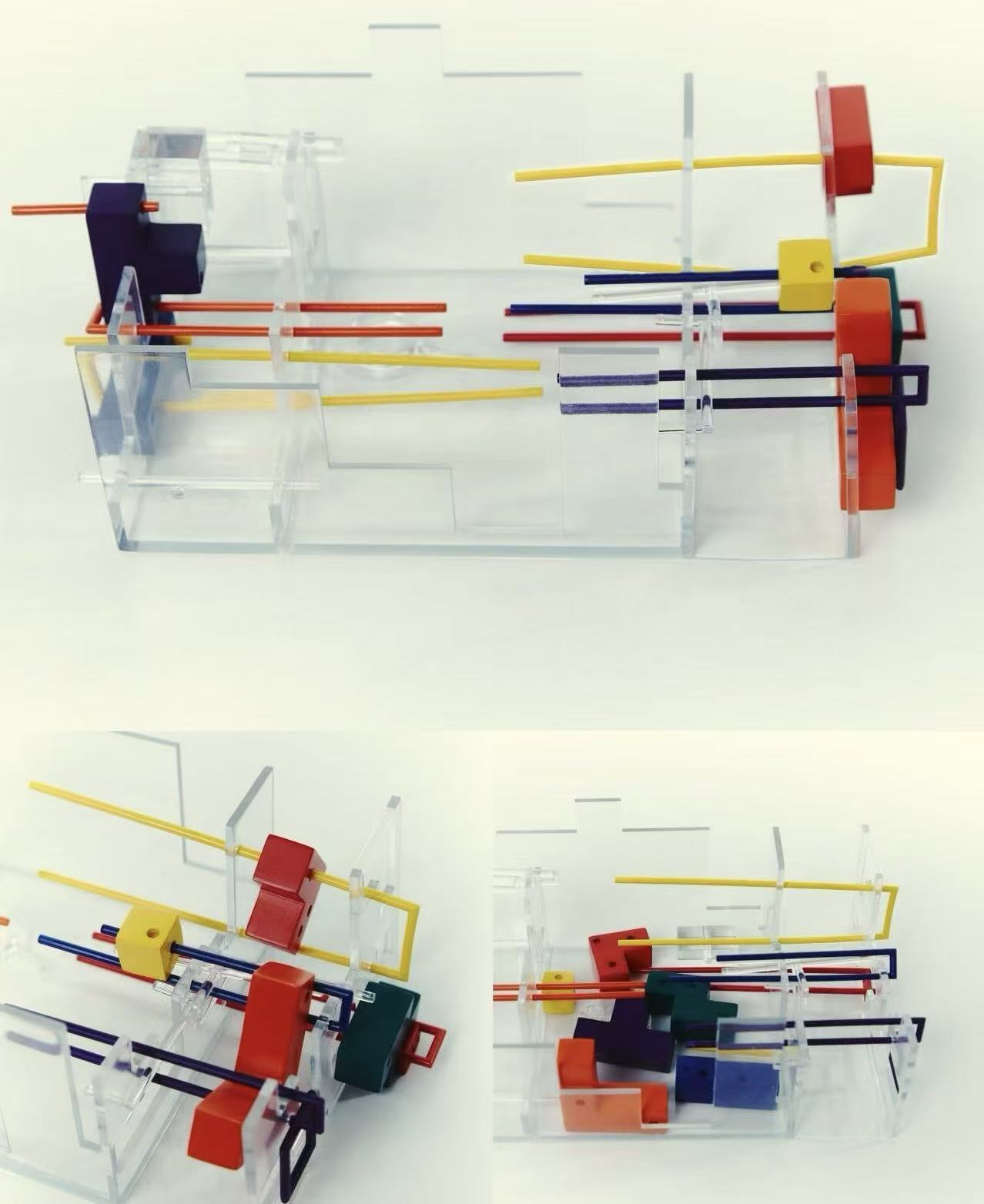
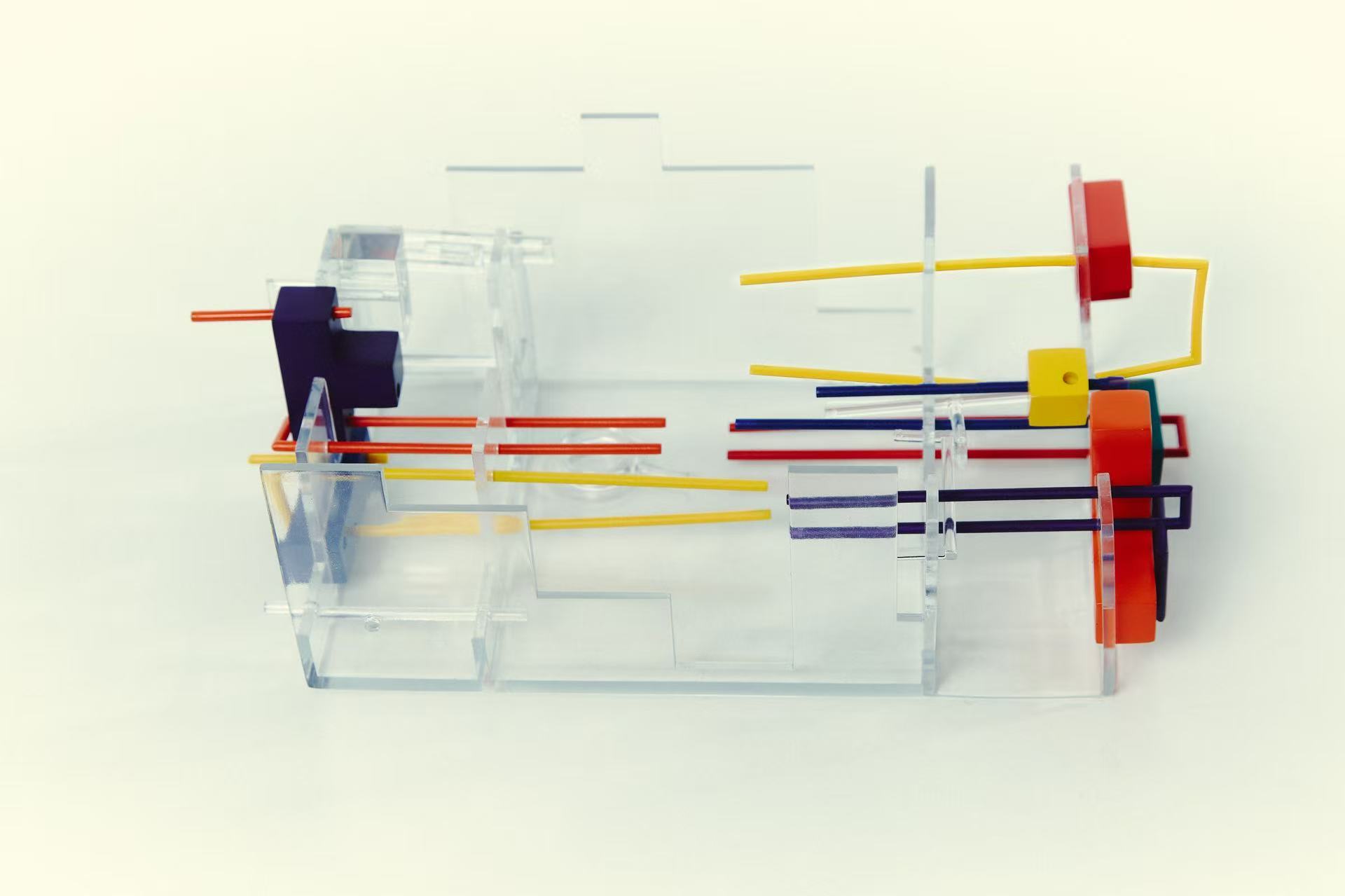
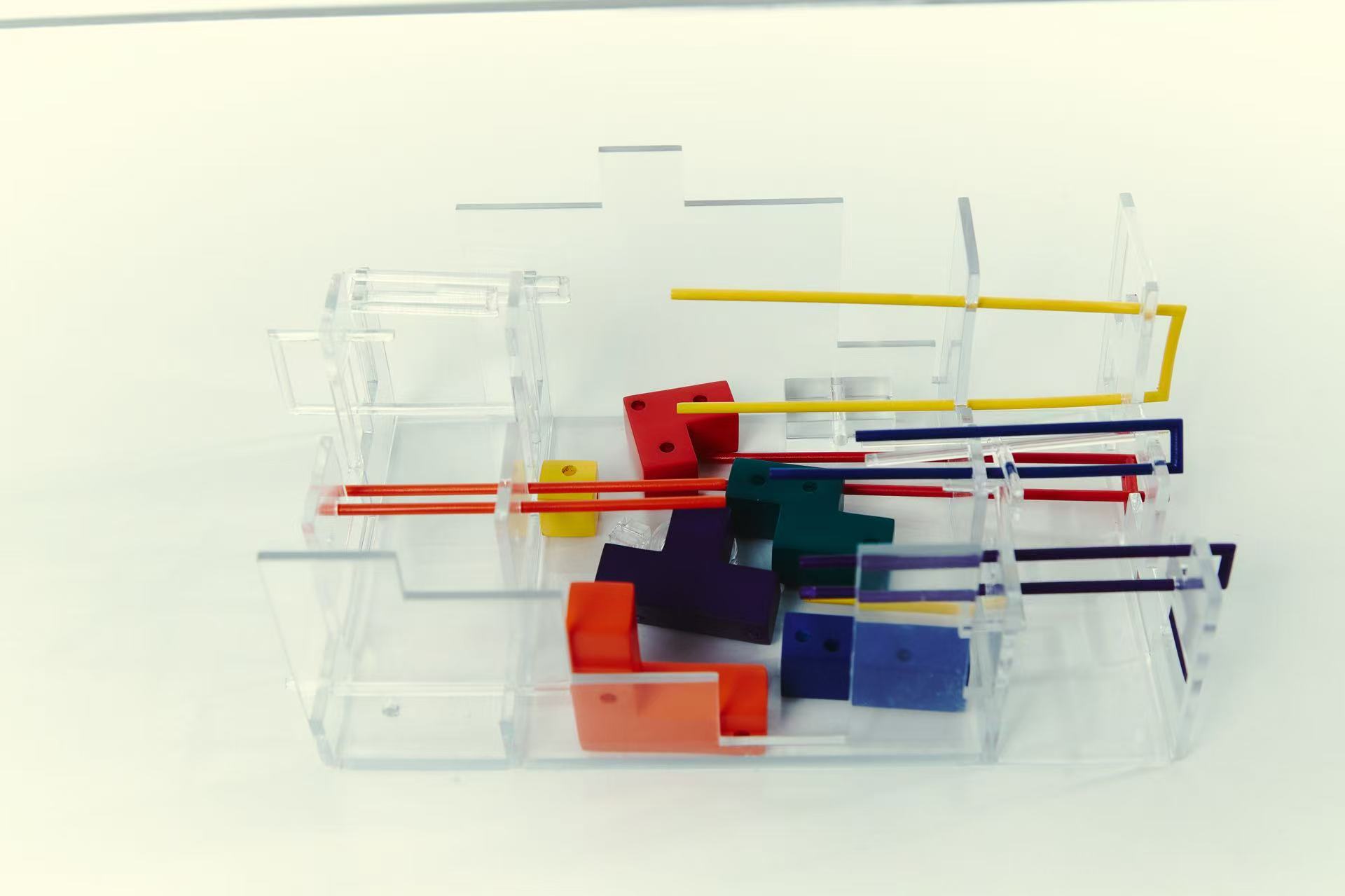
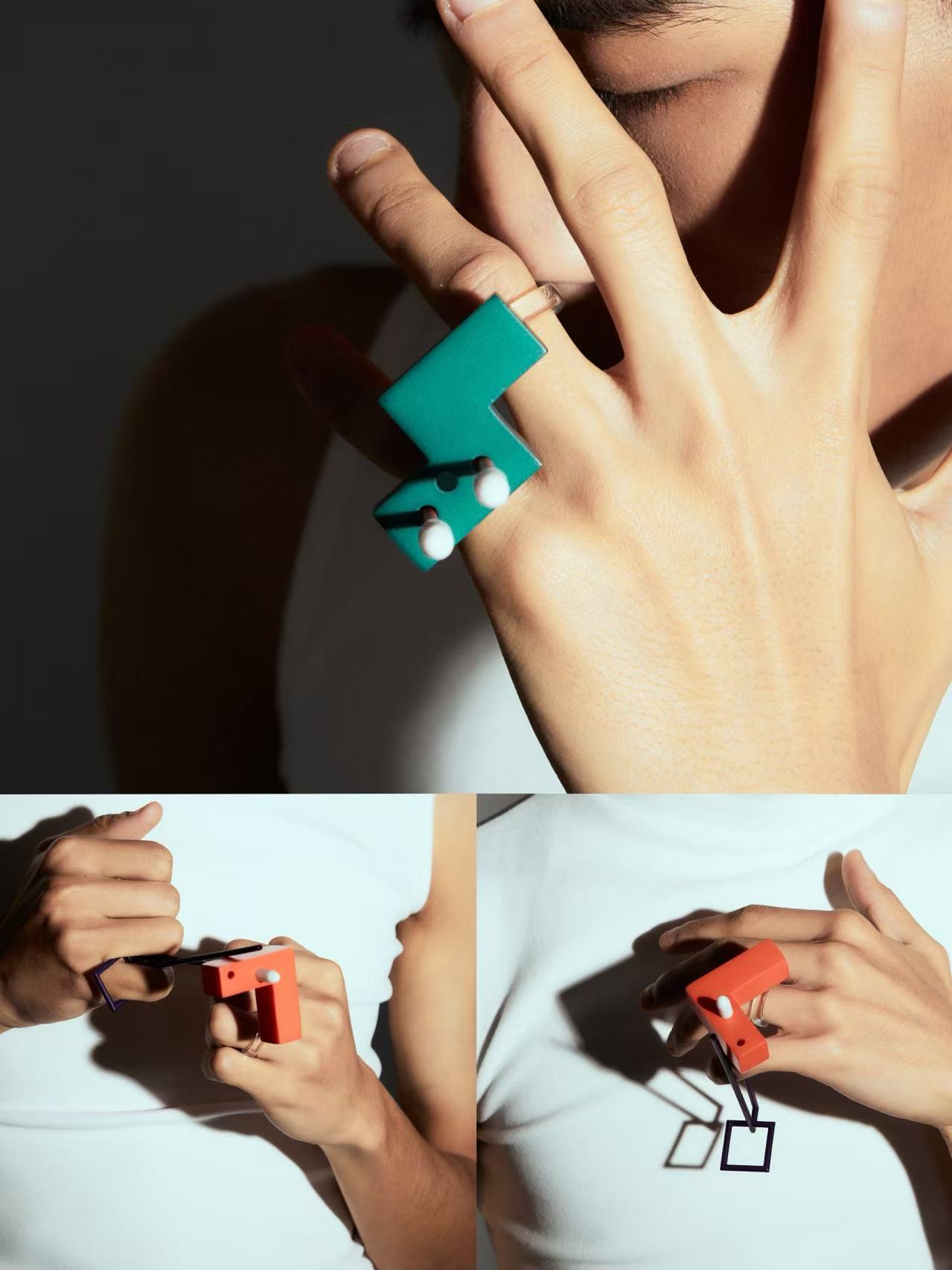
Tetris translates the logic of the game Tetris into a wearable interactive artefact, using it as a metaphor for pressure, anxiety, and the process of reorganising oneself during the post-pandemic period. The project reflects on the constant demand to impose order on unstable conditions, where failure and reconstruction exist in continuous cycles.
Key mechanisms of the game—rotation, descent, collision, and alignment—are abstracted into mechanical structures that can be worn and manipulated. Through assembly and disassembly, the wearer engages with a controlled system that mirrors the experience of managing uncertainty and stress, offering a temporary sense of agency within constraint.
Transparent resin is used to distinguish non-interactive structures from movable components, while bold primary and complementary colours reference the visual language of the original game. Together, these elements form a modular system in which reconfiguration becomes both a physical action and a visual expression of adaptation and resilience.